
Walk better: Tips for maintaining correct posture on your hikes
Hiking is a great way to connect with nature, but doing it with poor posture can lead to aches and pains.
Maintaining correct posture is essential to avoid injury and get the most out of your hikes. Here are some key tips to improve your posture on your hiking routes.
1. Head upright and look straight ahead
It’s easy to get carried away by the scenery and walk with your head tilted down. However, keeping your head up and your eyes straight ahead is key to avoid overloading your neck and back. This will also allow you to see the trail ahead and avoid obstacles.
2. Relaxed shoulders and a straight back
Shoulders tend to tense up, especially when carrying a backpack. Relax them and keep your back straight to avoid pain. Adjust the backpack straps so that the weight is balanced and doesn’t affect your posture.
3. Active core
Keeping your core active stabilises your spine and helps you keep your balance on uneven terrain. It’s not about tensing your muscles, but engaging them to avoid leaning forward or backward.
4. Arms in natural motion
Let your arms swing naturally to the rhythm of your steps. This will not only help you keep your balance, but also distribute the effort. If the terrain is very steep, you can use trekking poles for extra stability.
5. Light step and hip alignment
Keep your stride smooth and light so as not to overload your joints. It is important that your hips are in line with the rest of your body to avoid strain on your lower back. This is crucial on long distance routes or uneven terrain.
6. Proper footwear for hiking
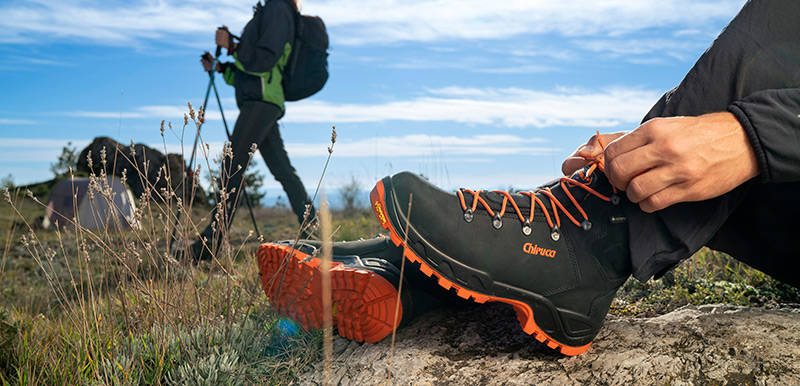
Footwear plays a key role in posture. Make sure you wear hiking boots with good arch support and a sole suited to the terrain you will be walking on, allowing you to maintain your balance and feel as comfortable as possible.
7. Tips for going up and down slopes
When walking uphill, lean your body slightly forward to maintain your balance, but do not hunch your back. Keep your steps short and steady, using trekking poles if you have them to relieve pressure on your knees. When walking downhill, maintain an upright posture, with controlled steps and core activation to avoid straining the lower back. On steep terrain, it is advisable to use poles to stabilise yourself and distribute your weight evenly.
Benefits of good hiking posture
Adopting proper posture prevents muscle aches, improves breathing, circulation and helps you walk longer without feeling fatigued. It also reduces the risk of long-term injury, especially on more demanding routes.
Maintaining good hiking posture will make the experience more enjoyable and less strenuous. Adjusting your body and following these tips will allow you to enjoy every step in nature without worrying about aches and pains.
- Chiruca-Produkte (6)
- Der Weg des Heiligen Jakobus (1)
- Nachricht (13)
- Tipps (12)
- Wandern (3)